
Piriformis Exercises PDF: A Comprehensive Guide
This detailed PDF resource offers a step-by-step approach to managing piriformis syndrome, featuring targeted stretches, strengthening routines, and preventative strategies.
Discover effective exercises, foam rolling techniques, and guidance for creating a personalized plan for long-term relief and improved hip mobility.
Understanding Piriformis Syndrome
Piriformis syndrome is a frequently overlooked condition causing discomfort in the lower back and buttocks. It arises from direct injury or, commonly, overuse – when training intensity exceeds the body’s capacity to adapt. This leads to irritation of the sciatic nerve as it passes near or through the piriformis muscle, resulting in pain radiating down the leg.
Effective management centers around exercises designed to alleviate muscle tension and restore proper biomechanics. A comprehensive approach, detailed within this guide, focuses on stretching the piriformis muscle, strengthening surrounding hip muscles, and employing self-massage techniques. Understanding the root cause and implementing a tailored exercise program is crucial for long-term relief and preventing recurrence. Ignoring the issue can lead to chronic pain and functional limitations.
What is the Piriformis Muscle?
The piriformis muscle is a small, pear-shaped muscle located deep within the buttock, playing a vital role in hip movement. It originates from the sacrum and attaches to the greater trochanter of the femur, enabling external rotation, abduction, and extension of the hip joint. Crucially, the sciatic nerve passes underneath or even through the piriformis muscle in many individuals.
This anatomical relationship explains why piriformis tightness can irritate the sciatic nerve, leading to piriformis syndrome. Variations in this anatomy contribute to differing symptom presentations. Understanding the muscle’s function and location is fundamental to performing exercises correctly and effectively targeting the source of discomfort. Proper exercise execution ensures safe and beneficial outcomes, promoting hip health and alleviating nerve compression.
Causes of Piriformis Syndrome
Piriformis syndrome arises from compression or irritation of the sciatic nerve by the piriformis muscle. Direct trauma to the buttock, such as from a fall, can initiate the condition. However, more commonly, it develops due to overuse or repetitive strain, particularly in activities involving prolonged sitting, running, or improper training techniques.
An imbalance in hip muscles, with weakness in the glutes and tightness in the piriformis, is a significant contributing factor. Training volume exceeding the body’s capacity can also trigger symptoms. Anatomical variations, where the sciatic nerve passes directly through the piriformis, increase susceptibility. Identifying the root cause is crucial for tailoring an effective exercise program and preventing recurrence.
Symptoms of Piriformis Syndrome
Piriformis syndrome commonly manifests as pain in the buttock, often radiating down the sciatic nerve into the thigh, calf, and even the foot. This pain can be sharp, burning, or aching, and is frequently aggravated by prolonged sitting, walking, or climbing stairs. Numbness and tingling sensations may also accompany the pain, mimicking sciatica.
Individuals may experience discomfort when ascending hills or performing activities that internally rotate the hip. Tenderness upon palpation of the piriformis muscle is a key indicator. Symptoms can vary in intensity, ranging from mild discomfort to debilitating pain. Accurate symptom identification is vital for differentiating piriformis syndrome from other conditions and guiding appropriate exercise selection.
Diagnosis and Assessment
A thorough evaluation, including a physical exam and ruling out other conditions, is crucial for accurate diagnosis and creating an effective exercise plan.
Physical Examination Techniques
A comprehensive physical examination is paramount in diagnosing piriformis syndrome and differentiating it from other potential causes of lower back and buttock pain. Healthcare professionals employ several specific tests to assess the piriformis muscle and sciatic nerve function.
The FAIR test (Flexion, Adduction, Internal Rotation) is commonly used; pain reproduction during this maneuver suggests piriformis involvement. The Freiberg test involves compressing the piriformis muscle while the patient is seated, also aiming to elicit pain. Palpation of the piriformis muscle itself can reveal tenderness or tightness.
Straight leg raise (SLR) testing, while often associated with disc herniations, can also be positive in piriformis syndrome, though typically at lower angles. Assessing hip range of motion, gait, and posture provides further insights. Careful neurological examination is essential to rule out nerve compression from other sources.
Ruling Out Other Conditions
Accurate diagnosis necessitates excluding conditions that mimic piriformis syndrome’s symptoms. Sciatica stemming from lumbar disc herniation is a primary consideration, requiring imaging like MRI to assess spinal health. Sacroiliac joint dysfunction can also present with similar pain patterns, necessitating specific SI joint provocation tests.
Hip osteoarthritis and bursitis must be differentiated through range-of-motion assessment and potentially imaging. Hamstring strains can cause buttock pain, but typically present with different mechanisms of injury. Vascular issues, though less common, should be considered, particularly if pain is accompanied by numbness or coldness.
A thorough medical history, including any prior injuries or systemic conditions, is crucial. Ruling out these possibilities ensures appropriate treatment and avoids misdiagnosis, leading to more effective pain management and improved patient outcomes.
Stretching Exercises for Piriformis Syndrome
Targeted stretches are vital for relieving pressure on the sciatic nerve and restoring flexibility to the piriformis muscle, easing discomfort and improving mobility.
Seated Piriformis Stretch
To perform the seated piriformis stretch, begin by sitting upright on a chair with your feet flat on the floor. Gently cross your affected leg over the opposite knee, forming a figure-four shape.
Maintain a straight back and slowly lean forward from your hips, keeping your chest up and shoulders relaxed. You should feel a stretch deep in your gluteal region, specifically in the piriformis muscle.
Hold this position for approximately 30 seconds, breathing deeply and consistently. Avoid bouncing or forcing the stretch. Repeat this stretch 2-3 times on each side, ensuring you feel a comfortable stretch without pain.
This stretch effectively targets the piriformis muscle, helping to alleviate tension and reduce irritation of the sciatic nerve.
Supine Piriformis Stretch (Figure Four Stretch)
Lie on your back with your knees bent and feet flat on the floor. Bring your right ankle to rest on your left knee, creating a figure-four position. Gently pull your left thigh towards your chest, interlacing your fingers behind it or over your shin.
Maintain a relaxed neck and shoulders, and keep your lower back pressed gently into the floor. You should feel a stretch in the right gluteal region, targeting the piriformis muscle.
Hold the stretch for 30 seconds, breathing deeply and evenly. Repeat 2-3 times on each side. For a deeper stretch, gently press on the inside of your right knee.
This stretch is excellent for releasing tension in the piriformis and alleviating sciatic nerve compression.
Kneeling Piriformis Stretch
Begin in a kneeling position with your left knee on the ground and your right foot forward, forming a 90-degree angle. Ensure your right knee is stacked directly over your right ankle. Gently lean forward, keeping your back straight and core engaged, until you feel a stretch in your left gluteal region.
To intensify the stretch, gently push your left hip backward. Maintain a neutral spine and avoid rounding your back. You should feel the stretch specifically targeting the piriformis muscle on the side of your kneeling leg.
Hold this position for 30 seconds, focusing on deep, controlled breathing. Repeat the stretch 2-3 times on each side. This stretch is particularly effective for those experiencing deep gluteal pain.
Standing Piriformis Stretch
Begin by standing with your feet shoulder-width apart. Cross your right ankle over your left knee, forming a figure-four shape. Maintain a slight bend in both knees to avoid locking them. Gently sit back as if you are lowering into a chair, keeping your back straight and your core engaged.
You should feel a stretch in your right gluteal region. To deepen the stretch, gently press down on your right knee with your right hand. Avoid forcing the stretch; listen to your body and stop if you feel any pain.
Hold this position for 30 seconds, breathing deeply and consistently. Repeat the stretch 2-3 times on each side. This stretch is convenient and can be performed almost anywhere.
Strengthening Exercises for Piriformis Syndrome
Strengthening key hip and gluteal muscles is crucial for stabilizing the pelvis and reducing strain on the piriformis muscle.
These exercises enhance support, improve function, and contribute to long-term relief from piriformis syndrome symptoms.
Glute Bridges
Glute bridges are a foundational exercise for strengthening the gluteus maximus, which plays a vital role in hip extension and external rotation. This directly supports the piriformis muscle and improves overall hip stability.
How to perform: Lie on your back with knees bent and feet flat on the floor, hip-width apart. Engage your core and squeeze your glutes as you lift your hips off the floor, creating a straight line from your shoulders to your knees.
Hold at the top for a few seconds, focusing on the glute contraction, then slowly lower back down. Sets/Reps: Begin with 3 sets of 10-12 repetitions.
Progression: To increase the challenge, add a resistance band around your thighs or perform single-leg glute bridges. Proper form is essential to avoid lower back strain.
Clamshells
Clamshells are an excellent exercise for strengthening the gluteus medius, a key muscle responsible for hip abduction and stabilizing the pelvis. Strengthening this muscle helps to counteract the internal rotation often associated with piriformis syndrome, reducing stress on the piriformis itself.
How to perform: Lie on your side with knees bent and stacked, feet together. Keeping your feet together, lift your top knee away from the bottom knee, like opening a clamshell.
Focus on squeezing your glutes throughout the movement. Sets/Reps: Start with 3 sets of 15-20 repetitions on each side.
Progression: Add a resistance band around your thighs just above the knees to increase the challenge. Maintain a neutral spine and avoid arching your back.
Side Leg Raises
Side leg raises are a fantastic exercise for targeting the gluteus medius and minimus, crucial muscles for hip abduction and pelvic stability. Strengthening these muscles helps to improve hip control and reduce the strain on the piriformis muscle, alleviating symptoms of piriformis syndrome.
How to perform: Lie on your side with legs extended and stacked. Keeping your leg straight, slowly lift your top leg towards the ceiling, maintaining control throughout the movement.
Avoid rotating your hip or arching your back. Sets/Reps: Begin with 3 sets of 15-20 repetitions on each leg.
Progression: Incorporate ankle weights or a resistance band around your ankles to increase the intensity. Focus on a slow, controlled motion for optimal muscle engagement.
Quadruped Arm/Leg Raises
Quadruped arm/leg raises are an excellent exercise to enhance core stability and strengthen the gluteal muscles, indirectly supporting the piriformis. This exercise challenges your body to maintain a neutral spine while coordinating movement, improving overall neuromuscular control.
How to perform: Start on your hands and knees, ensuring your back is flat and your core is engaged. Simultaneously extend one arm forward and the opposite leg backward, keeping your body in a straight line.
Hold for 5 seconds, then slowly return to the starting position. Sets/Reps: Perform 3 sets of 10-12 repetitions on each side.
Focus: Maintain a stable core throughout the exercise to prevent lower back arching. Controlled movements are key for effective muscle activation and injury prevention.
Foam Rolling & Self-Massage
Utilize foam rolling and spiky ball massage to release tension in the glutes and piriformis muscle, promoting flexibility and reducing discomfort effectively.
Foam Roller for Glutes and Piriformis
To perform this self-massage technique, begin by sitting on the floor with your knees bent and feet flat. Place a 4-inch diameter foam roller under one side of your glutes.
Support your weight with your hands and the opposite foot. Slowly roll your glute over the foam roller, searching for tender spots.
When you find a particularly sensitive area, pause and maintain pressure for 20-30 seconds, allowing the muscle to release.
Repeat this process for 60-90 seconds on each side, focusing on the piriformis muscle located deep within the glutes.
Remember to breathe deeply throughout the exercise and avoid rolling directly over the lower back or sciatic nerve.
This technique helps to break up adhesions and improve blood flow, alleviating pain and restoring optimal muscle function.
Spikey Ball Massage
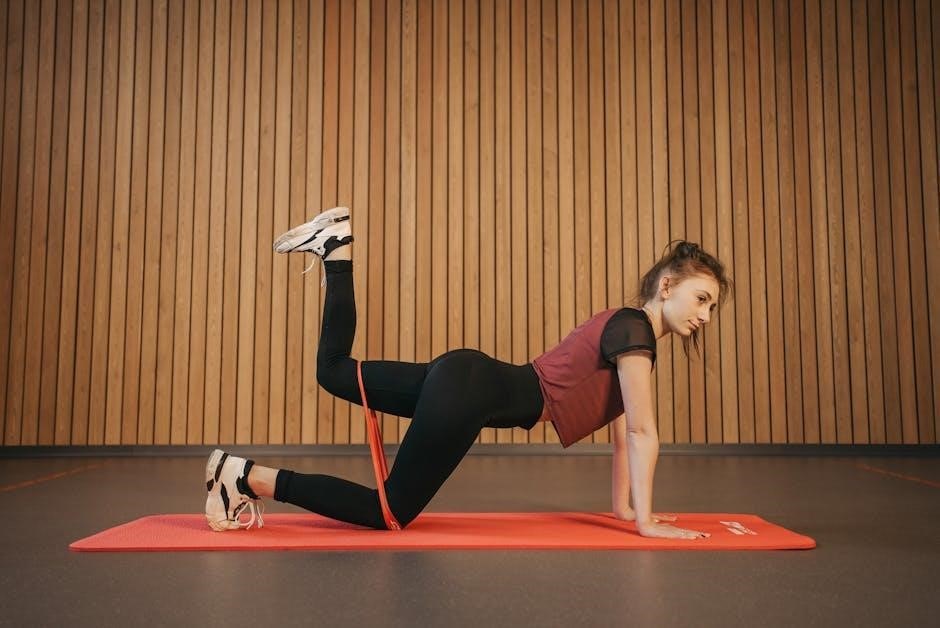
Utilizing a spiky ball offers a more targeted and intense self-massage experience for the piriformis muscle. Begin by sitting on the floor with your knees bent and feet flat.
Position the spiky ball under one glute, near the upper portion of your sit bone. Support your weight with your hands and the opposite foot.
Gently shift your weight onto the ball, allowing the spikes to penetrate the muscle tissue. Slowly move your body to roll the ball over the glute.
Focus on areas that feel particularly tight or tender, pausing for 20-30 seconds on each spot.
Repeat for 60-90 seconds per side, breathing deeply throughout the process.
Be mindful of the intensity and adjust pressure as needed. This technique effectively releases muscle knots and improves flexibility.

Advanced Exercises & Techniques
Progress beyond basic stretches with resistance band exercises and hip abduction movements, enhancing strength and stability for optimal piriformis function.
Walking Sideways with Resistance Band
This exercise effectively targets the gluteus medius, a key muscle working in synergy with the piriformis, promoting hip stability and reducing strain.
To perform this exercise, secure a resistance band around your ankles or just above your knees. Maintain a slight bend in your knees and keep your back straight, engaging your core throughout the movement.
Take small, controlled steps sideways, maintaining tension on the band. Focus on leading with your foot and preventing your knees from collapsing inward.
Complete 10-15 steps in one direction, then repeat in the opposite direction for 2-3 sets. Adjust the resistance band’s strength to match your fitness level, gradually increasing it as you gain strength.
This dynamic movement improves hip control and strengthens the muscles responsible for stabilizing the pelvis, contributing to long-term piriformis health.
Hip Abduction Exercises
Hip abduction exercises are crucial for strengthening the gluteus medius and minimus, muscles vital for stabilizing the hip and counteracting the piriformis’s internal rotation.
These exercises can be performed using a resistance band looped around your ankles, or with bodyweight alone. Lie on your side with your legs extended, keeping your core engaged. Slowly lift your top leg towards the ceiling, maintaining a straight leg and avoiding rotation.
Focus on squeezing your gluteal muscles throughout the movement. Lower your leg slowly and repeat for 10-15 repetitions on each side, completing 2-3 sets.
Variations include standing hip abductions, using a cable machine, or incorporating side-lying leg lifts with ankle weights to increase the challenge. Consistent hip abduction work supports proper hip mechanics and reduces piriformis strain.
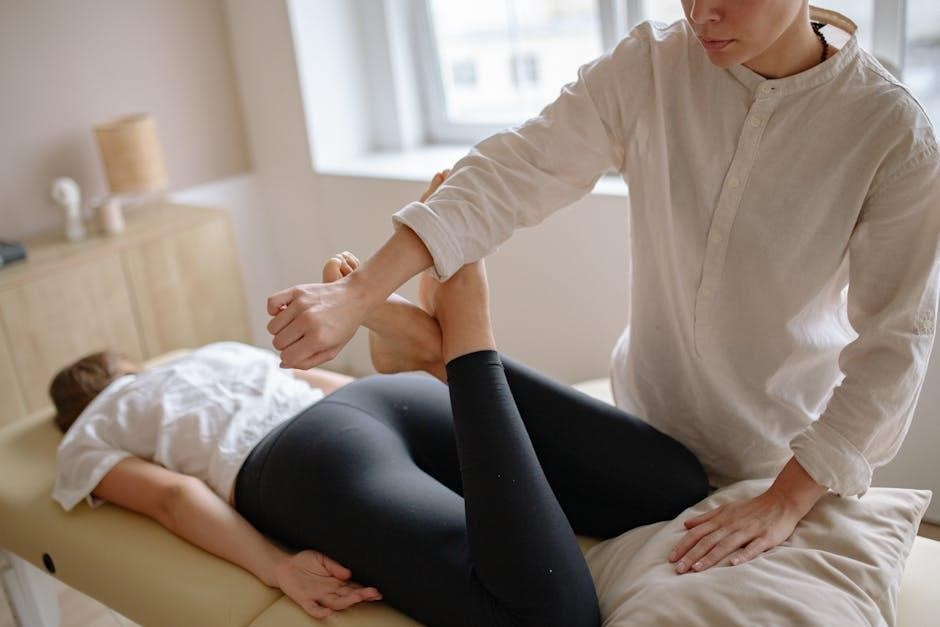
Preventative Measures & Long-Term Management
Consistent warm-ups, cool-downs, good posture, and ergonomic adjustments are key to preventing recurrence and maintaining long-term relief from piriformis syndrome.
Proper Warm-up and Cool-down
Prior to engaging in piriformis-focused exercises, a dynamic warm-up is crucial for preparing the muscles and joints. This should include gentle movements like leg swings, hip circles, and torso twists, increasing blood flow and flexibility.
A proper warm-up minimizes the risk of injury and enhances exercise effectiveness. Following your exercise routine, a cool-down is equally important. Static stretches, holding each stretch for 20-30 seconds, help to gradually reduce muscle tension and improve flexibility.
Focus on stretches targeting the piriformis, glutes, hamstrings, and hip flexors. Consistent warm-up and cool-down routines contribute significantly to long-term management, preventing recurrence and promoting optimal hip function. Remember to listen to your body and avoid pushing beyond your comfort level during both phases.
Maintaining Good Posture
Good posture plays a vital role in preventing and managing piriformis syndrome, as poor alignment can exacerbate muscle imbalances and nerve compression. Consciously maintain a neutral spine, avoiding excessive slouching or arching of the back.
When sitting, ensure your feet are flat on the floor or supported, and your hips and knees are at a 90-degree angle. Use lumbar support to maintain the natural curve of your lower back.
Regularly check your posture throughout the day and make adjustments as needed. Strengthening core muscles is essential for supporting good posture. Incorporate exercises that target the abdominal and back muscles into your routine. Consistent attention to posture can significantly reduce strain on the piriformis muscle and alleviate symptoms.
Ergonomic Considerations
Optimizing your workspace ergonomics is crucial for preventing piriformis syndrome, especially if you spend prolonged periods sitting. Ensure your chair provides adequate lumbar support and is adjustable to maintain proper posture.
Position your monitor at eye level to avoid neck strain, which can contribute to muscle imbalances in the hips and lower back. Use a keyboard and mouse that allow your arms to be relaxed and your wrists straight.
Consider a standing desk or alternating between sitting and standing throughout the day to reduce pressure on the piriformis muscle. Regular breaks to stretch and move around are also essential. Implementing these ergonomic adjustments can minimize strain and promote a healthier, more comfortable work environment.

Creating a Piriformis Exercise PDF
Compile your chosen exercises into a printable PDF for easy access and tracking. Customize it with images, descriptions, and a schedule for consistent progress.
Resources for Printable Exercise Guides
Numerous online platforms offer pre-designed piriformis exercise PDFs, providing a convenient starting point for your rehabilitation journey. Websites dedicated to physical therapy and musculoskeletal health frequently host downloadable guides detailing stretches and strengthening exercises.
Search for resources from reputable sources like hospitals, clinics, or certified physical therapists to ensure accuracy and safety. Many healthcare professionals also create personalized PDF guides for their patients, offering tailored exercise programs.
Consider exploring platforms like Pinterest and fitness blogs, but always critically evaluate the information presented and cross-reference it with professional medical advice. Utilizing a combination of these resources can help you build a comprehensive and effective piriformis exercise PDF tailored to your specific needs and recovery goals.
Customizing Your PDF
Tailoring a piriformis exercise PDF to your individual needs is crucial for optimal results. Begin by assessing your pain levels and range of motion to identify exercises that are appropriate for your current condition.
Modify the frequency, intensity, and duration of exercises based on your tolerance and progress. Add notes to the PDF regarding specific modifications or cautions provided by your healthcare professional.
Incorporate exercises that address your unique biomechanical imbalances or contributing factors to piriformis syndrome. Consider adding visual aids, such as images or videos, to ensure proper form and technique. Regularly update your PDF as your condition improves, adding new challenges and progressing exercises to maintain long-term benefits.
Consulting with a Healthcare Professional

Before starting any new exercise program, especially when addressing piriformis syndrome, consulting a healthcare professional is paramount. A doctor or physical therapist can accurately diagnose your condition and rule out other potential causes of your pain.
They can provide personalized recommendations for exercises tailored to your specific needs and limitations. A professional can also assess your form and technique to prevent further injury.
Discuss your PDF exercise plan with your healthcare provider to ensure it aligns with your overall treatment goals. They can offer guidance on progression, modifications, and warning signs to watch for, ensuring a safe and effective recovery journey.