
HTH 6-Way Test Kit Instructions: A Comprehensive Guide
This guide provides detailed instructions for using the HTH 6-Way Test Kit to maintain optimal pool water chemistry.
It’s a perfect solution for quickly and easily testing your pool water,
ensuring accurate results for a safe and enjoyable swimming experience.
Understanding the HTH 6-Way Test Kit
The HTH 6-Way Test Kit is a comprehensive tool designed for homeowners and pool professionals alike, offering a convenient method for monitoring crucial water parameters. This kit stands out as the perfect solution for swiftly and accurately assessing both indoor and outdoor swimming pool water. It tests for six key elements, providing a holistic view of your pool’s chemical balance.
Unlike relying solely on visual cues or infrequent professional testing, the HTH 6-Way kit empowers you with week-after-week usability. It includes easy-to-follow instructions, delivering results in seconds, eliminating guesswork and ensuring consistent water quality. This test kit is versatile, compatible with all pool types – chlorine, bromine, and saltwater systems – making it a universal solution for pool maintenance.
The kit’s design prioritizes simplicity and accuracy, allowing users to proactively address potential issues before they escalate, ultimately contributing to a safer, cleaner, and more enjoyable swimming environment.
What Does the Kit Test For?
The HTH 6-Way Test Kit meticulously analyzes six vital components of your pool water, ensuring a balanced and sanitary swimming environment. These key elements include Free Chlorine, indicating the available sanitizer; Total Chlorine, measuring both free and combined chlorine; and pH Level, crucial for swimmer comfort and sanitizer effectiveness.

Furthermore, the kit assesses Total Alkalinity, which stabilizes pH levels, preventing fluctuations; Calcium Hardness, protecting pool surfaces from corrosion or scaling; and Cyanuric Acid (Stabilizer), shielding chlorine from sunlight degradation. By testing these six parameters, you gain a complete understanding of your pool’s chemical composition.
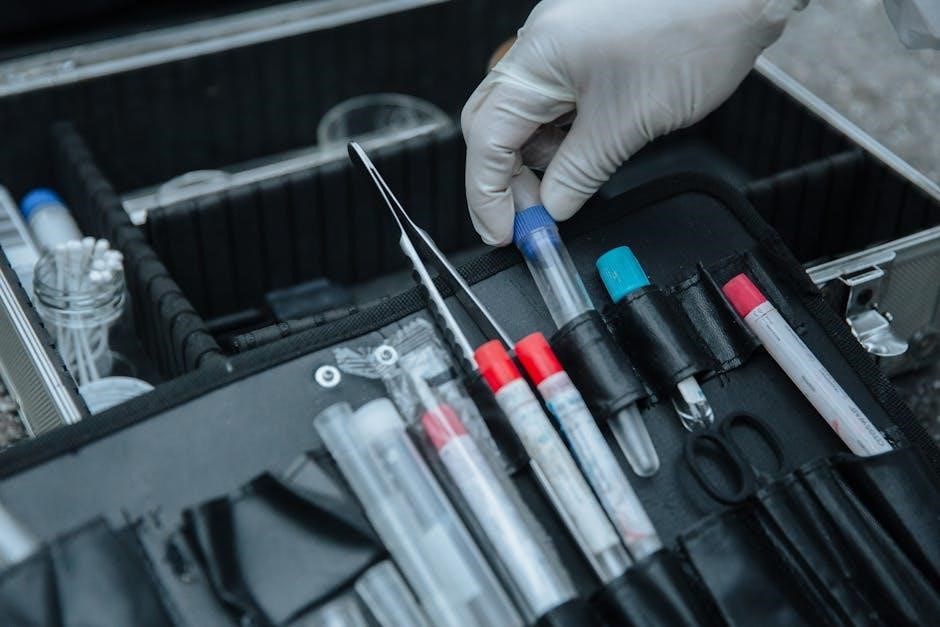
Regular testing with this kit allows for proactive adjustments, preventing algae growth, cloudy water, and potential damage to pool equipment. Maintaining these levels within the recommended ranges guarantees a safe, clear, and inviting pool experience for everyone.
Key Elements Measured: Free Chlorine
Free Chlorine (FC) represents the amount of active, available chlorine in your pool water, responsible for sanitizing and eliminating bacteria and algae. The HTH 6-Way Test Kit accurately measures this crucial level, providing insight into your pool’s disinfection capabilities. Maintaining an ideal FC range – typically between 1-3 ppm (parts per million) – is paramount for a safe and healthy swimming environment.
Low FC levels can lead to algae blooms and unsanitary conditions, while excessively high levels may cause irritation to swimmers’ eyes and skin. The kit’s color-matching system allows for easy determination of FC concentration, enabling prompt adjustments with chlorine additions.
Regular monitoring of FC, especially during peak swimming season or after heavy rainfall, ensures consistent sanitation. Proper FC levels are the cornerstone of effective pool water management, safeguarding swimmer health and extending the life of your pool.
Key Elements Measured: Total Chlorine
Total Chlorine (TC) measures the combined amount of both free chlorine (FC) and combined chlorine (CC) present in your pool water. The HTH 6-Way Test Kit provides a comprehensive assessment of TC, offering valuable insight into overall chlorine effectiveness. Combined chlorine consists of chloramines, formed when chlorine reacts with contaminants like sweat, urine, and organic matter.
While FC actively sanitizes, CC is less effective and responsible for the unpleasant chlorine odor and eye irritation. Ideally, CC should be as close to zero as possible. By comparing TC and FC readings, you can calculate the amount of CC present (TC ⎯ FC = CC).
High CC levels indicate a need for “shocking” the pool – adding a large dose of chlorine to break down the chloramines. Regular TC monitoring, alongside FC, ensures optimal water quality and a comfortable swimming experience. Maintaining balanced chlorine levels is vital for a healthy pool.
Key Elements Measured: pH Level
pH level is a crucial indicator of water acidity or alkalinity, significantly impacting swimmer comfort and the effectiveness of chlorine. The HTH 6-Way Test Kit accurately measures pH, allowing for precise adjustments to maintain optimal water balance. A pH of 7.0 is neutral; below 7.0 is acidic, and above 7.0 is alkaline (basic).
The ideal pH range for swimming pools is typically between 7.2 and 7.8. If the pH is too low, it can cause corrosion of pool equipment, eye and skin irritation, and reduced chlorine effectiveness. Conversely, a high pH can lead to scaling, cloudy water, and also diminished chlorine sanitation.
Regular pH testing with the HTH kit, and subsequent adjustments using pH increaser or decreaser, ensures a comfortable swimming environment and maximizes the benefits of your pool’s sanitation system. Consistent pH balance protects both swimmers and pool investments.
Key Elements Measured: Total Alkalinity
Total Alkalinity (TA) acts as a pH buffer, resisting drastic changes in pH levels. The HTH 6-Way Test Kit precisely measures TA, which is essential for stable and predictable water chemistry. Maintaining proper TA prevents pH bounce – sudden and unwanted fluctuations that can compromise water quality and sanitation.
The recommended TA range for most swimming pools is typically between 80 and 120 parts per million (ppm). Low TA can lead to pH instability, corrosion, and etching of pool surfaces. High TA, conversely, can cause scaling, cloudy water, and reduced chlorine effectiveness.
Adjusting TA involves using alkalinity increaser (sodium bicarbonate) to raise levels or muriatic acid to lower them. Regular TA testing with the HTH kit, followed by appropriate adjustments, ensures a consistently balanced pool environment, protecting both equipment and swimmer comfort.
Key Elements Measured: Calcium Hardness
Calcium Hardness (CH) measures the amount of calcium dissolved in your pool water. The HTH 6-Way Test Kit accurately determines CH levels, crucial for protecting your pool’s surfaces and equipment. Proper calcium hardness prevents corrosion and scaling, extending the lifespan of your investment.
Ideal CH levels generally fall between 200 and 400 parts per million (ppm), though specific recommendations can vary based on pool surface type. Low calcium hardness can cause water to aggressively seek calcium from pool surfaces (like plaster or grout), leading to etching and damage. Conversely, high CH can result in scale formation on surfaces and within equipment.
Adjusting CH involves adding calcium chloride to increase levels. Lowering CH is more challenging, often requiring partial water drainage and refilling with water of lower hardness. Consistent monitoring with the HTH kit and timely adjustments safeguard your pool’s integrity.

Key Elements Measured: Cyanuric Acid (Stabilizer)
Cyanuric Acid (CYA), often called stabilizer or conditioner, protects chlorine from being rapidly destroyed by the sun’s ultraviolet (UV) rays. The HTH 6-Way Test Kit precisely measures CYA levels, ensuring your chlorine remains effective for longer periods. Maintaining the correct CYA level is vital for cost-effective sanitation.
Optimal CYA levels typically range from 30 to 50 ppm, though higher levels may be acceptable in heavily sun-exposed pools. Insufficient CYA leads to rapid chlorine loss, requiring frequent additions and potentially resulting in inadequate sanitation. Excessive CYA, however, can reduce chlorine’s effectiveness, creating a “chlorine lock.”
Adjusting CYA involves adding cyanuric acid to increase levels. Lowering CYA requires partial water drainage and refilling, as CYA doesn’t readily dissipate. Regular testing with the HTH kit and appropriate adjustments optimize chlorine performance and water quality.
Preparing for Testing
Before commencing testing with your HTH 6-Way Test Kit, ensure accuracy by following these preparatory steps. First, verify the expiration dates on all reagent bottles; expired reagents yield unreliable results. Shake each reagent bottle vigorously for at least 30 seconds to ensure proper mixing of the chemicals. This is crucial for consistent and precise readings.
Next, thoroughly rinse the test block with tap water after each use to prevent cross-contamination between tests. Allow the block to air dry completely before storing. Select a representative water sample from approximately 18 inches below the surface, away from return jets or skimmers. Avoid touching the inside of the sample vial to maintain sample purity.
Finally, work in a well-lit area to clearly observe color changes. Having a clean, flat surface will also aid in accurate readings. Proper preparation guarantees reliable results, enabling effective pool water management.
Gathering Your Water Sample
Obtaining a representative water sample is paramount for accurate testing with the HTH 6-Way Test Kit. Submerge the sample vial approximately 18 inches (45 cm) below the pool’s surface. Avoid sampling immediately after heavy rain, significant bather load, or chemical additions, as these factors can skew results. Position the vial away from return inlets and skimmers to prevent biased readings.
Ensure the vial is facing away from the pool’s circulation flow. Do not touch the inside of the vial with your hands or any object, as this can contaminate the sample. Fill the vial to the indicated fill line, ensuring a sufficient volume for testing. A properly collected sample accurately reflects the overall pool water chemistry.
For above-ground pools, sample from a location away from the filter and any direct sunlight. Remember, a representative sample is the foundation of reliable test results and effective pool maintenance.
Step-by-Step Testing Procedure: Chlorine
To test for chlorine levels, first, fill the chlorine comparator block with a water sample from your pool, ensuring it’s up to the fill line. Next, add 4 drops of the R-013 reagent to the chlorine sample block. Gently swirl the block to mix the reagent and water. Allow 20 seconds for the color to fully develop – avoid direct sunlight during this process.
Compare the resulting color with the chlorine color standards on the comparator block. Match the sample color to the closest standard to determine your pool’s free chlorine level. Note the reading in parts per million (ppm). Repeat the process for total chlorine by adding 4 drops of R-014 reagent instead of R-013.
Accurate chlorine testing is crucial for maintaining proper sanitation. Remember to rinse the comparator block thoroughly after each test.
Step-by-Step Testing Procedure: pH and Alkalinity

Begin by filling the pH/Alkalinity comparator block with a water sample from your pool, up to the indicated fill line. Add 5 drops of the pH reagent (R-002) to the pH sample portion and swirl gently. Allow 60 seconds for the color to develop, shielding it from direct sunlight for accurate results.
Compare the resulting color to the pH color standards on the comparator block, noting the corresponding pH level. For alkalinity testing, add 5 drops of the R-003 reagent to the alkalinity sample portion and swirl. Allow 10 seconds for color development. Compare this color to the alkalinity standards.
Proper pH and alkalinity balance are vital for water comfort and sanitizer effectiveness. Rinse the comparator block thoroughly after each test to prevent cross-contamination.
Step-by-Step Testing Procedure: Calcium Hardness & Cyanuric Acid
To test calcium hardness, fill the Calcium Hardness comparator block section with a pool water sample; Add 2 drops of the Calcium Hardness reagent (R-004) and swirl gently. Allow the color to develop for 60 seconds, avoiding direct sunlight. Compare the resulting color to the calcium hardness standards provided on the color comparator block.
For Cyanuric Acid (stabilizer) testing, fill the Cyanuric Acid section of the comparator with a water sample. Add 5 drops of the Cyanuric Acid reagent (R-005) and swirl. Allow one minute for the color to fully develop. Compare the color to the Cyanuric Acid standards.
Maintaining proper calcium hardness prevents etching or scaling, while stabilizer protects chlorine from sunlight. Rinse the comparator block thoroughly after each test.
Reading and Interpreting Results: Chlorine Levels
Interpreting chlorine results requires understanding Free Chlorine (FC) and Total Chlorine (TC). Match the color developed in the chlorine test block to the color standards provided. Ideal Free Chlorine levels should be between 1-3 ppm (parts per million) for most pools.
Total Chlorine measures both free and combined chlorine. Combined chlorine, formed when chlorine reacts with contaminants, is ineffective as a sanitizer. A significant difference between TC and FC indicates the presence of combined chlorine, requiring shock treatment.
Low FC levels mean insufficient sanitation, potentially leading to algae growth and bacteria. High FC levels can cause irritation. Adjust chlorine levels accordingly, following pool chemical guidelines. Accurate readings ensure a safe and healthy swimming environment.
Reading and Interpreting Results: pH and Alkalinity Levels
Interpreting pH and Alkalinity is crucial for water balance. Compare the color developed in the pH test block to the provided color chart. The ideal pH range is 7.2-7.8. pH affects chlorine’s effectiveness; low pH reduces it, while high pH can cause scaling.
Total Alkalinity (TA) acts as a pH buffer, preventing drastic swings. Match the TA test block color to the chart. The recommended TA range is 80-120 ppm. Low TA causes pH instability, while high TA makes pH difficult to adjust.
Maintaining proper pH and TA ensures swimmer comfort, protects pool equipment, and maximizes sanitizer efficiency. Adjust levels using pH increaser/decreaser and alkalinity increaser, following product instructions carefully. Consistent monitoring is key.
Reading and Interpreting Results: Calcium Hardness Levels
Calcium Hardness (CH) measures the amount of calcium dissolved in your pool water. Compare the color developed in the test block to the color chart provided with your HTH 6-Way Test Kit. The ideal range for CH is typically between 200-400 ppm, though this can vary based on pool surface type.
Low calcium hardness (below 200 ppm) can cause corrosive water, damaging pool surfaces and equipment. It can also lead to etching of plaster or vinyl liners. Conversely, high calcium hardness (above 400 ppm) can result in scaling and cloudy water.
Adjust calcium hardness using calcium chloride to increase levels, or partial draining and refilling with fresh water to decrease them. Maintaining proper CH protects your investment and ensures a comfortable swimming experience. Regular testing is vital for consistent water balance.
Reading and Interpreting Results: Cyanuric Acid Levels
Cyanuric Acid (CYA), often called stabilizer or conditioner, protects chlorine from sunlight degradation. Compare the color developed in the test block to the color chart included with your HTH 6-Way Test Kit. The ideal CYA level typically ranges from 30-50 ppm, but can be higher for saltwater pools – up to 80 ppm.
Low CYA levels mean chlorine dissipates quickly, requiring more frequent additions. High CYA levels, exceeding 100 ppm, can lock up chlorine, reducing its effectiveness and leading to algae growth. This is known as chlorine lock.
Adjust CYA by adding stabilizer to increase levels, or by partially draining and refilling with fresh water to decrease them. Consistent monitoring ensures optimal chlorine efficiency and prevents water quality issues. Regular testing is crucial for maintaining balanced pool chemistry.
Maintaining Accurate Results

Achieving reliable test results with your HTH 6-Way Test Kit hinges on consistent technique and reagent care. Always use the provided color comparator against a white background, avoiding shadows or colored surfaces which can skew your perception. Ensure the test block is held level during color development for uniform reaction.
Store reagents in a cool, dry place, tightly sealed, away from direct sunlight and heat. Avoid contamination by never returning used reagent to the bottle. Shake reagent bottles gently before use to ensure proper mixing. Replace reagents according to the expiration date printed on the labels – expired reagents yield inaccurate readings.
Proper kit storage and careful handling of reagents are paramount for dependable water analysis. Consistent adherence to these practices guarantees the accuracy of your pool chemistry measurements, contributing to a safe and healthy swimming environment.
Troubleshooting Common Issues

If your test results appear unclear or inconsistent, first verify reagent freshness and proper storage. Cloudy water samples can interfere with readings; clarify the water before testing. If colors are difficult to distinguish, ensure adequate lighting and a clean comparator. A lack of color development may indicate expired or improperly stored reagents.
Discrepancies between test parameters could signal a problem with the testing procedure itself. Double-check that you’re following the step-by-step instructions precisely, using the correct amount of reagent for each test. Contamination of the sample or test block can also lead to inaccurate results – use fresh sample containers and avoid touching the test block’s reaction areas.
If issues persist, consider replacing the test kit or contacting HTH customer support for assistance. Consistent troubleshooting and attention to detail will ensure reliable pool water analysis.
Where to Purchase Replacement Reagents
Maintaining your HTH 6-Way Test Kit requires periodic replacement of reagents to ensure accurate readings. Fortunately, obtaining refills is convenient and accessible through various channels. A primary source is Amazon.com, offering a wide selection of HTH replacement fluid packs specifically designed for this kit – easily found with a quick search.
Additionally, many local pool supply stores carry HTH reagents, providing the benefit of immediate availability and expert advice. Big box retailers like Walmart and Home Depot also stock pool chemicals, including HTH refills, though selection may vary. Online retailers specializing in pool care, such as InTheSwim.com, are another reliable option.
When purchasing, verify the reagent pack is compatible with the HTH 6-Way Test Kit to guarantee proper functionality and accurate results. Regularly replacing reagents is crucial for dependable water analysis.
Kit Storage and Lifespan
Proper storage is essential to maximize the lifespan and accuracy of your HTH 6-Way Test Kit. Store the kit in a cool, dry place, away from direct sunlight and extreme temperatures; Avoid locations with high humidity, as moisture can degrade the reagents. Ideally, a temperature-controlled indoor environment is best.
The unopened reagent bottles typically have a shelf life of approximately one to two years, depending on the specific formulation. Once opened, however, the reagents’ accuracy diminishes over time. It’s recommended to replace opened reagents every six months, or sooner if you notice any discoloration or changes in consistency.
The test kit itself, excluding the reagents, can last for several years with proper care. Regularly cleaning the color comparator and ensuring all components are dry after use will contribute to its longevity. Following these guidelines ensures reliable pool water testing for seasons to come.
Resources and Further Information
For comprehensive support and detailed guidance beyond this guide, several resources are readily available. The official HTH website provides a wealth of information, including frequently asked questions, troubleshooting tips, and downloadable resources related to pool and water care. You can often find a digital version of the HTH 6-Way Test Kit instructions PDF directly on their site.
Online retailers like Amazon, where the kit is frequently sold, often host customer reviews and Q&A sections that can offer practical insights from fellow pool owners. Numerous online forums and communities dedicated to swimming pool maintenance are also excellent places to seek advice and share experiences.
Additionally, local pool supply stores typically have knowledgeable staff who can provide personalized assistance and answer specific questions about your pool’s water chemistry. Remember to consult the kit’s packaging for contact information and warranty details.