
Embarking on an E30 manual transmission swap revitalizes the driving experience, offering greater control and engagement. This conversion, while complex, unlocks the car’s full potential.
Why Swap to a Manual Transmission?
Converting an E30 from automatic to manual dramatically enhances driver involvement and control. Many enthusiasts prefer the direct connection and responsiveness a manual gearbox provides, fostering a more engaging driving experience. Swapping also addresses potential reliability concerns with aging automatic transmissions. Furthermore, a manual swap can improve performance by eliminating torque converter losses, resulting in quicker acceleration and better fuel efficiency. It’s a popular modification for those seeking a purer, more connected feel behind the wheel of their classic BMW.
Overview of E30 Transmission Options
Several manual transmission choices exist for the E30, each offering distinct characteristics. The Getrag 245 is a common, cost-effective 5-speed, suitable for most E30 engines. For higher-powered builds, the Getrag 265 provides increased strength and durability. A more advanced, albeit rarer, option is the BMW S5D 266 6-speed, offering closer gear ratios and a sportier feel. Selecting the right transmission depends on your engine’s output, intended use, and budget considerations.

Identifying Your Current Transmission
Determining your E30’s original transmission type is crucial before starting. This involves decoding the VIN or performing a visual inspection to confirm automatic versus manual.
Decoding Your E30’s VIN
Your E30’s Vehicle Identification Number (VIN) holds vital clues about its original configuration. Specifically, the transmission type is encoded within this unique identifier. Locating the VIN is typically found on the driver’s side dashboard near the windshield, or on the vehicle’s title and registration. Online VIN decoders, readily available through BMW enthusiast forums like Bimmerforums, can translate these codes.
These decoders reveal the original gearbox installed at the factory, confirming whether your E30 left the assembly line with a manual or automatic transmission. Accurate decoding is the first step towards a successful swap, ensuring you procure compatible parts.
Visual Identification of Automatic vs. Manual Transmissions
A straightforward visual inspection can often confirm your E30’s current transmission type. Automatic transmissions generally have a larger transmission tunnel and a shift lever with ‘P, R, N, D, 3, 2, 1’ positions. Manual transmissions exhibit a smaller tunnel, accommodating only the shift linkage.
Look for the presence of a clutch pedal – a clear indicator of a manual setup. Examining the center console also reveals differences; manual cars have a simpler layout without the automatic shifter. Confirming visually complements VIN decoding for accuracy.
Choosing the Right Manual Transmission
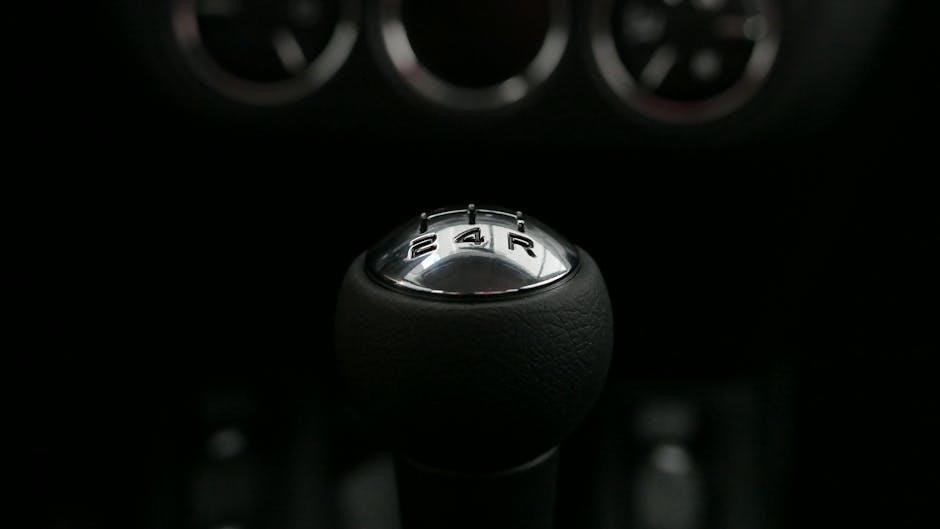
Selecting the ideal transmission depends on power goals and driving style. Options range from the common Getrag 245 to the robust Getrag 265 and advanced S5D 266.
Getrag 245 (5-Speed) – Common Choice
The Getrag 245 is a widely favored and readily available 5-speed manual transmission for E30 swaps. It’s known for its durability and relatively straightforward installation process, making it an excellent entry point for many enthusiasts. Commonly found in E36 325i and 328i models, it offers a good balance of strength and affordability. While suitable for most E30 engines, it may reach its limits with significantly increased horsepower. Sourcing a used unit is generally easy, and rebuild kits are also accessible, ensuring longevity. Its widespread use translates to ample online resources and community support for installation and troubleshooting.
Getrag 265 (5-Speed) – For Higher Power
The Getrag 265 represents a substantial upgrade in strength over the 245, making it ideal for E30s with modified or high-horsepower engines. Originally equipped in the E36 328i and some M3 models, it boasts larger gears and stronger internal components. This transmission can comfortably handle increased torque and power output, providing a more confident driving experience. However, the 265 is typically more expensive and harder to find than the 245. Installation can also be slightly more complex, potentially requiring modifications to the transmission tunnel or driveshaft.
BMW S5D 266 (6-Speed) – Advanced Option
The BMW S5D 266, a 6-speed transmission from the E46 M3, is the most advanced – and challenging – option for an E30 swap. It offers incredibly precise shifting and wider gear ratios, maximizing performance; However, this conversion demands significant modifications, including custom driveshafts, potentially a modified rear subframe, and extensive wiring work. It’s also the most expensive choice. This swap is best suited for experienced builders aiming for a truly unique and high-performing E30.
Gathering Necessary Parts
Successful E30 manual swaps require sourcing a comprehensive parts list, including the transmission, pedal assembly, clutch, shifter, and potentially a modified driveshaft.
Transmission Itself
Selecting the correct transmission is paramount for a successful E30 swap. Options include the readily available Getrag 245, a robust 5-speed, or the stronger Getrag 265 for higher horsepower applications. For advanced drivers, the BMW S5D 266 6-speed offers exceptional performance.
Ensure the chosen transmission’s input shaft is compatible with your engine. Thoroughly inspect any used transmission for wear, damage, and smooth operation before committing to the swap. Consider rebuild kits for preventative maintenance.
Pedal Assembly
Converting from automatic necessitates a complete pedal assembly change. Sourcing a complete manual pedal set – brake, clutch, and accelerator – from a donor E30 is highly recommended. Verify compatibility with your specific E30 model year.
Pay close attention to the clutch pedal’s mounting points and ensure proper alignment for smooth operation. New bushings and hardware are advisable to eliminate play and ensure a solid feel during clutch engagement.
Clutch Kit (Disc, Pressure Plate, Throwout Bearing)
A new clutch kit is essential for a reliable swap, including the disc, pressure plate, and throwout bearing. Select a kit rated for your engine’s power output; upgrading is wise for modified engines.
Ensure the kit matches the transmission’s input shaft spline count and diameter. Inspect the flywheel for wear or damage and resurface or replace it as needed. Proper lubrication during installation is crucial for longevity.
Shifter and Linkage
The shifter and linkage connect driver input to the transmission, demanding careful selection and installation. Options range from stock BMW parts to aftermarket short-throw shifters for a more precise feel.
Verify compatibility with your chosen transmission. Proper adjustment is vital for smooth, accurate shifts. Worn bushings contribute to sloppy shifting; replacing them enhances the driving experience significantly. Consider a new shift knob for improved ergonomics.
Driveshaft (Potential Modification Required)
The driveshaft transmits power from the transmission to the rear differential, often requiring modification during a manual swap. Automatic and manual transmission outputs differ in length, necessitating a driveshaft shortening or replacement.
Carefully measure the required length to avoid vibration or binding. Welding or purchasing a custom driveshaft are common solutions. Ensure proper balancing after any modification to prevent drivetrain issues and maintain smooth operation at all speeds.
Wiring Harness and ECU Considerations
Integrating the manual transmission requires addressing wiring harness changes and potential ECU needs. Automatic transmission sensors and switches are no longer needed, demanding their removal or repurposing.
Some E30 models may require ECU reprogramming to optimize performance and eliminate error codes related to the absent automatic transmission. Carefully review wiring diagrams and consider a standalone ECU if extensive modifications are necessary for a seamless integration.
Mounts and Hardware
Securing the new manual transmission necessitates verifying compatibility of existing mounts and sourcing appropriate hardware. While the transmission mount itself may be reusable, inspect it for wear and tear.
You’ll need new bolts, nuts, and washers specifically for the transmission installation. Don’t forget to account for the clutch cable or hydraulic line brackets, ensuring proper alignment and secure fastening for a reliable swap.
Preparation for the Swap
Thorough preparation is key; disconnect the battery and carefully remove the automatic transmission. Inspect all components, cleaning them meticulously before beginning the installation process.
Disconnecting Battery
Before commencing any electrical work during the E30 manual transmission swap, safely disconnect the battery. Begin by locating the negative terminal and carefully loosen the nut securing the cable. Gently remove the cable, ensuring it doesn’t contact any metal surfaces. Then, repeat the process for the positive terminal. Secure both cables away from the battery posts to prevent accidental reconnection; This crucial step safeguards against short circuits and potential damage to the vehicle’s electrical system during the swap process, ensuring a safe working environment.
Removing Automatic Transmission
Begin the automatic transmission removal by supporting the engine from above. Disconnect the driveshaft, shifter linkage, and all electrical connectors. Next, remove the exhaust system components obstructing access. Support the transmission with a jack, then unbolt the transmission mounts. Carefully lower the transmission, ensuring it clears all surrounding components. This process requires patience and attention to detail, as the automatic transmission is a substantial weight. Proper support is vital for safety and preventing damage during removal.
Cleaning and Inspecting Components
Thorough cleaning of all components is crucial before reassembly. Remove old grease and grime from the transmission housing, bellhousing, and driveshaft. Inspect the flywheel for cracks or excessive wear, replacing it if necessary. Examine the rear main seal for leaks and replace it proactively. Check the condition of the transmission mounts and bushings, addressing any deterioration. This meticulous inspection ensures a reliable and long-lasting manual transmission swap, preventing future issues.
Installation Process
Carefully install the manual transmission, clutch, shifter, and linkage, ensuring proper alignment. Wiring and driveshaft integration are key, followed by pedal assembly mounting.
Installing the Manual Transmission
Positioning the transmission requires careful alignment with the engine. Support it with a transmission jack, ensuring it’s level. Gently guide it into place, mating it with the engine smoothly. Secure the transmission to the engine block using the appropriate bolts, tightening them to the manufacturer’s specified torque. Double-check all connections before proceeding, verifying proper seating and alignment. Incorrect installation can lead to significant damage or shifting issues, so precision is paramount during this crucial step.
Installing the Clutch
Begin by carefully aligning the clutch disc with the pilot bearing, utilizing a clutch alignment tool to ensure perfect centering. Gently slide the disc and pressure plate assembly onto the flywheel, securing it with the provided bolts. Tighten these bolts in a star pattern, gradually and evenly, to prevent warping. Finally, install the throwout bearing onto the release fork, preparing for linkage connection. Proper clutch installation is vital for smooth engagement and longevity.
Connecting the Shifter and Linkage
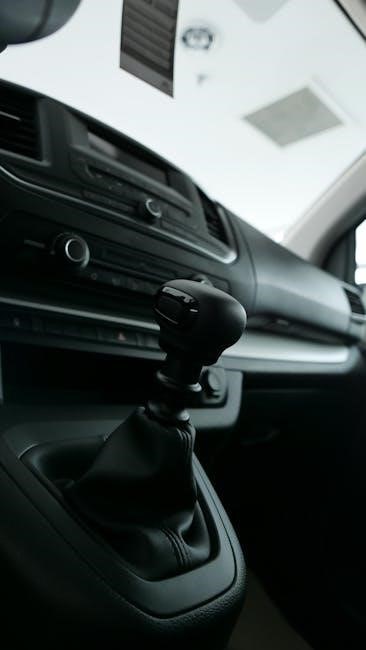
Mount the chosen shifter assembly into the transmission tunnel, ensuring secure fastening. Connect the shift linkage, carefully adjusting the rod lengths for precise gear selection. Proper alignment is crucial; misadjusted linkage results in difficult or imprecise shifts. Test each gear’s engagement, making fine adjustments as needed. Verify smooth operation and eliminate any binding or looseness within the linkage system for optimal performance.
Wiring and ECU Integration
Connect the necessary wiring for the clutch switch, crucial for starting and preventing accidental gear engagement. Depending on the E30’s original configuration and the swapped transmission, ECU reprogramming might be required. This ensures proper engine management with the manual transmission. Verify all connections are secure and correctly polarized. Address any error codes related to transmission control systems post-installation for optimal functionality.
Driveshaft Installation/Modification
Carefully install the driveshaft, ensuring proper alignment with the differential and transmission. Due to differing lengths between automatic and manual setups, modification or replacement is often necessary. Measure accurately before cutting or ordering a new driveshaft. Verify the driveshaft’s U-joints are in good condition and properly lubricated. Incorrect length can cause vibrations or damage, so precision is paramount during this step.
Pedal Assembly Installation
Installing the manual pedal assembly requires careful attention to detail. Remove the existing automatic brake pedal and install the clutch, brake, and accelerator pedals. Ensure proper mounting and secure all bolts to the specified torque. Verify full pedal travel and smooth operation before proceeding. Adjust pedal height if necessary for optimal driver comfort and control. Double-check all connections for safety.
Post-Installation Checks and Adjustments
Thorough post-swap checks are crucial. Adjust the clutch and shifter for smooth operation, then verify all fluid levels are correct for optimal performance.
Clutch Adjustment
Proper clutch adjustment is paramount for a seamless driving experience after the swap. Begin by ensuring the clutch cable has the correct free play, typically around 25-35mm. Too little play causes slippage, while excessive play hinders full engagement.
Adjust the cable via the adjuster nut located near the firewall. Test drive the vehicle, monitoring for smooth shifts and no clutch drag. Fine-tune the adjustment until optimal pedal feel and engagement are achieved, ensuring reliable operation and preventing premature wear.
Shifter Adjustment
Precise shifter adjustment is crucial for accurate gear selection post-swap. Begin by verifying the shifter linkage is correctly installed and all bushings are in good condition. Adjust the linkage rods to ensure clean, defined gates between each gear.
Improper adjustment leads to missed shifts or a sloppy feel. Test drive, paying attention to gate precision. Fine-tune the linkage until shifts are crisp and direct, enhancing driving enjoyment and control.
Fluid Levels
After the E30 manual transmission swap, verifying fluid levels is paramount for optimal operation and longevity. Fill the transmission with the BMW-specified gear oil, typically a GL-4 rated 75W-90. Carefully check for leaks around the input and output seals after filling.
Also, inspect and top off the clutch master and slave cylinders with DOT 3 or DOT 4 brake fluid. Maintaining correct fluid levels prevents damage and ensures smooth, reliable shifting performance.
Potential Issues and Troubleshooting
Common challenges post-swap include clutch feel, shifting difficulties, and driveshaft vibrations. Careful diagnosis and adjustment are crucial for a seamless experience.
Clutch Pedal Feel
Addressing clutch pedal feel is often the first step in post-swap refinement. A spongy or excessively firm pedal indicates issues with the hydraulic system, master cylinder, or slave cylinder. Bleeding the system thoroughly is essential to remove air bubbles.
Incorrect clutch cable adjustment (if applicable) can also contribute to poor feel. Ensure proper engagement and disengagement points for smooth shifting. Inspect for leaks and worn components within the hydraulic lines, as these can drastically affect pedal pressure and responsiveness.
Shifting Problems
Difficulty shifting gears post-swap often points to linkage adjustments or internal transmission issues. Verify the shifter linkage is correctly aligned and secure, ensuring clean, precise movements. Grinding gears suggest incomplete clutch disengagement, requiring clutch adjustment or inspection.
Check for worn synchros within the transmission itself, especially in older units. Low transmission fluid levels can also cause shifting difficulties; top up with the correct BMW specification fluid and re-evaluate performance.
Driveshaft Vibration
Post-swap driveshaft vibration typically indicates an imbalance or incorrect U-joint angles. Carefully inspect the driveshaft for damage and ensure it’s properly balanced. Verify the driveshaft’s pinion angle matches the transmission output flange; misalignment causes vibrations.
Worn U-joints contribute to vibration, necessitating replacement. A driveshaft loop may be required to support longer shafts, preventing critical angle issues and ensuring smooth power delivery.
ECU Compatibility Issues
ECU recalibration might be necessary after a manual transmission swap, especially with engine swaps or modified vehicles. Automatic and manual ECUs differ in their programming, impacting fuel delivery and ignition timing. Mismatched ECUs can cause poor performance or even engine damage.
Chip tuning or a standalone ECU offers solutions, optimizing engine parameters for the new transmission. Thorough research and professional tuning are crucial for a reliable outcome.
Resources and Communities
Online forums like Bimmerforums and E30-specific groups provide invaluable support, technical advice, and parts sourcing for your transmission swap project.
Bimmerforums
Bimmerforums stands as a premier online destination for BMW enthusiasts, offering a dedicated space for E30 owners undertaking manual transmission swaps. Expect to find detailed build threads documenting similar projects, providing step-by-step guidance and troubleshooting tips.
The forum’s active community readily shares expertise on parts compatibility, installation challenges, and post-swap adjustments. Access technical how-to information, maintenance specifics, and advice on wheel/tire combinations. It’s a crucial resource for navigating the complexities of this modification, connecting you with experienced individuals willing to assist.
E30 Specific Forums
Dedicated E30 forums provide a focused environment for discussing manual transmission swaps, catering specifically to the nuances of these classic BMWs. These platforms often host detailed guides tailored to the E30 chassis, addressing unique challenges not found in generic BMW forums.
Members frequently share experiences with specific transmission options (Getrag 245, 265, S5D 266), offering insights into fitment, required modifications, and potential issues. Expect to find valuable information regarding parts sourcing and local mechanic recommendations specializing in E30s.
BMW Parts Suppliers
Sourcing components for an E30 manual transmission swap requires reliable BMW parts suppliers specializing in classic models. Several vendors offer new and used parts, including transmissions, clutch kits, pedal assemblies, and shifter linkages.
Look for suppliers with a strong reputation for quality and accurate parts listings. Online retailers and dedicated E30 specialists can provide the necessary hardware, often offering technical support and guidance throughout the process. Comparing prices and availability is crucial for a cost-effective swap.

Cost Estimation
An E30 manual swap’s cost varies greatly. Parts range from $500 to $2000+, while labor adds $800-$1500 if professionally installed, depending on complexity.
Parts Costs
Estimating parts costs for an E30 manual swap requires careful consideration. A Getrag 245 transmission typically ranges from $300 to $800, depending on condition. Clutch kits, including disc, pressure plate, and throwout bearing, generally cost between $150 and $350. The pedal assembly can add another $200-$400.
Shifter mechanisms and linkage vary from $100 to $300. Don’t forget the driveshaft, potentially needing modification at $150-$400, and wiring/ECU adjustments costing $50-$200. Mounts and hardware contribute another $50-$150. These are approximate figures, and prices fluctuate.
Labor Costs (If Applicable)
If outsourcing the E30 manual swap, labor costs significantly impact the overall expense. Expect a professional shop to charge between $800 and $1,500 for the complete conversion. This range accounts for the complexity and time involved – typically 12 to 20 hours of work.
Rates vary geographically and by shop expertise. Diagnosing and resolving unforeseen issues can increase these costs. Performing the swap yourself saves considerably, but requires mechanical skill and proper tools.

Final Thoughts and Considerations
The E30 manual transmission swap is a rewarding, albeit demanding, project. Thorough planning, meticulous execution, and sourcing quality parts are crucial for success. Be prepared for potential challenges and budget accordingly, factoring in unforeseen expenses.
Ultimately, the enhanced driving experience – the direct connection and control – makes the effort worthwhile. Enjoy the revitalized classic and the satisfaction of a job well done!